
Council of Heads of Australasian Herbaria
Australian National Herbarium
Biographical Notes

|
|
Council of Heads of Australasian Herbaria | |
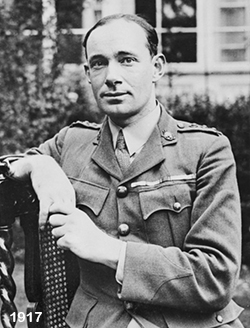 Wilkins, George Hubert (1888 - 1958)
Born on 31 October 1888 near Hallett, SA; died on 30 November 1958 at Framingham,
Massachusetts, USA.
The youngest of thirteen children, he spent his early years
on his father's sheep station.
He enrolled in both the South Australian
School of Mines and the Elder Conservatorium School of Music simultaneously, he
studied electrical engineering and singing, playing the organ, flute and cello at the
Conservatorium.
On a trip to Sydney he became interested in
photography, with a particular interest in moving pictures. Returning to Adelaide he
found employment with a travelling cinema and travelled in both South Australia
and the Eastern States showing films.
His overseas travels began by stowing away on a ship at Port
Adelaide. The ship deposited him in Sydney and he soon
found employment as a projectionist, then later as a
cinematographer.
On reaching London he obtained work with the Gaumont
Company as a cinematographic cameraman and with the
Daily Chronicle as a reporter. It was then (1910) that he learnt to fly at Hendon.
In WW-1, he joined Australian forces as a photographer, and became a major chronicler of their role in the war. He crossed enemy lines in a balloon, rescued wounded soldiers, and he was gassed.
After the war an opportunity arose for him to travel to
Russia, via France, Austria, Germany, Czechoslovakia and Poland. His employers
wanted him to photograph and write reports on the work of the Society of Friends' (Quakers) Emergency and War Victims Relief Committee.
It was in the final stages of their Russian commission that Wilkins received a cable
from the British Museum asking him to organise an expedition on the Museum's
behalf to Northern Australia. His prestige as a naturalist by then carried a lot of
weight with those directing the Museum's activities - so much so that the Museum
had approached the British Parliament for the funds necessary to finance what they
called the 'Wilkins Island and Australian Expedition'.
The purpose of this expedition was to make a biological survey of both sides of the
Great Dividing Range, and to cover the country from Sydney to Cape York including
the Great Barrier Reef. Wilkins, being the leader of the expedition, also assumed the
role of specimen collector and photographer.
During his travels he took a great
interest in a small Aboriginal tribe he discovered in the Katherine River region. It took him many weeks to gain their trust and for them to allow him near
their encampments. He spent two months collecting specimens and studying their
culture. Wilkins had discovered an interest in anthropology.
At the end of this expedition he had spent nearly two and a half years in the bush.
(1923-1925) travelling with scientists J.E. Young, Vladimir Kotoff and Oscar G. Cornwell. Between them they had collected hundreds of specimens and many boxes of fossils and minerals.
After their return to London with their collection, it was reported by the Museum
specialists that at least nine mammal specimens were new to science, and one of
them was to be called Petrogale wilkinsi in Wilkins's honour. His report on the
expedition was also tabled, and his not having time to publish it, the Museum had it
published for him entitled 'Undiscovered Australia'.
Wilkins' later, and far more famous life as a polar explorer is well documented elsewhere on the web.
He managed to buy the US WW-1-vintage submarine Nautilus for one dollar, in 1931. He used it in the first journey under the Arctic ice cap. He continued his Arctic and Antarctic explorations until WW-II. Then, when the Australian military deemed him too old for service, he went to work for the US Navy as a consultant.
In early 1958, the first US nuclear submarine, also named Nautilus, completed Wilkin's journey and crossed all the way under the ice cap. Wilkins died shortly after on 30 November 1958, and another US submarine, the Skate, carried his ashes on its historic mission: It sailed under ice, then punctured it and surfaced at the North Pole. The sailors held a memorial service for Wilkins, and they scattered his ashes there.
Source: Extracted from:
https://engines.egr.uh.edu/episode/2023
Jim Rogers: https://www.saam.org.au/history_group_docs/SAAM%20Biography%20-%20WILKINS%20Sir%20George%20Herbert%20.pdf
Portrait Photo: 1917, World War I, Aust. War Memorial, C390979.
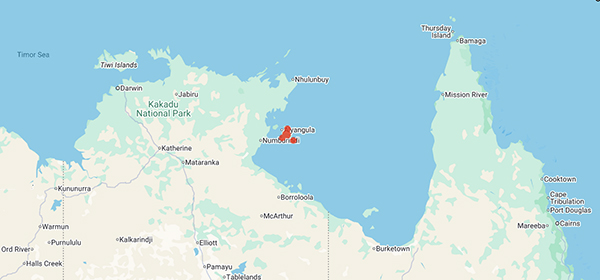
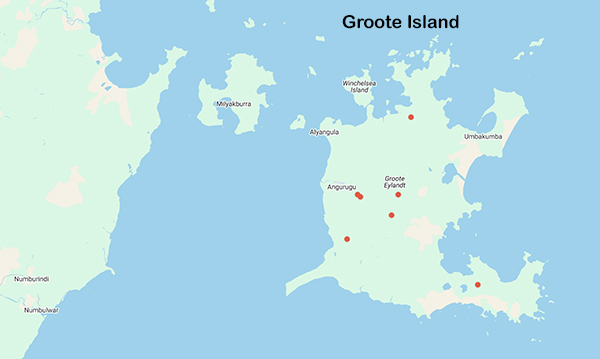
Data from 12 specimens in Australian herbaria (presumably more in British Museum)